DoorDash
Usability Testing the Food Delivery Experience

For my SI 303: Introduction to Qualitative Research Methods course at the University of Michigan, my team conducted a usability study of the DoorDash mobile app. We observed how infrequent users navigated the ordering experience to uncover usability barriers and translate our findings into actionable design recommendations.
The Problem: DoorDash promises an effortless ordering experience, but even small moments of friction can make it difficult for users to successfully customize orders, accommodate dietary needs, resolve issues, and complete less familiar tasks.
Our Challenge: How might DoorDash make the ordering experience more intuitive and accessible for new and infrequent users?
Role: UX Researcher | Team: 4 Students | Timeline: Winter 2026
Our Process
Define Users + Testing Protocol
PLAN
12 Moderated Usability Tests
TEST
Code Behaviors + Identify Patterns
SYNTHESIZE
Insights + Recommendations
DESIGN
We used moderated usability testing to understand how infrequent DoorDash users navigate multi-step ordering tasks, documenting behaviors, completion paths, task times, reactions, and participant feedback.
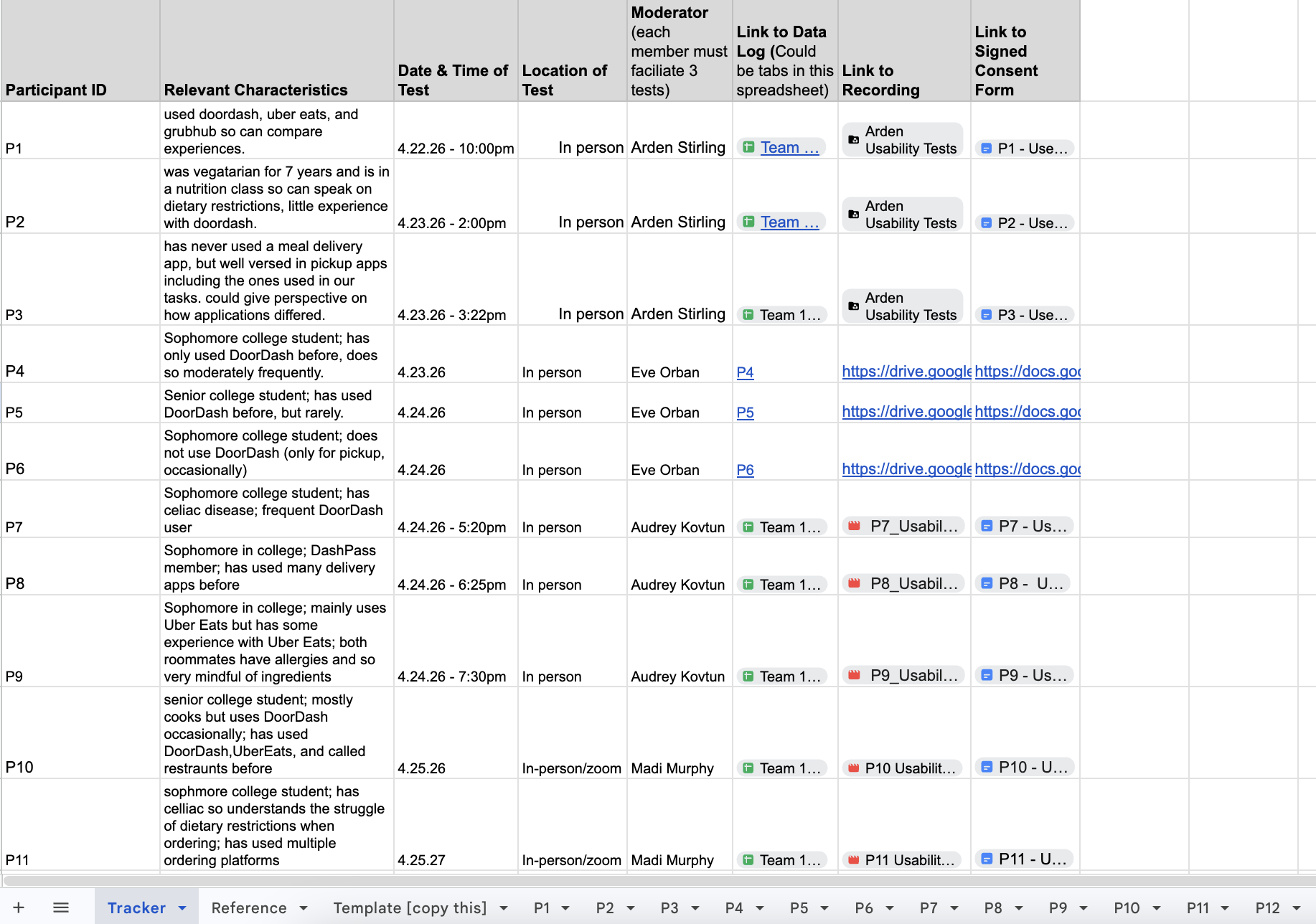
Each team member conducted three tests for a total of 12 participants. We then synthesized notable quotes, behaviors, usability issues, and recurring patterns into actionable findings.

INITIAL MARKET RESEARCH
-
We recruited undergraduate students ages 18+ who used DoorDash or other meal-delivery apps fewer than three times per month. By focusing on infrequent users, we aimed to surface usability problems that frequent users may have already learned to work around.
-
Our team conducted 12 moderated usability tests. Participants were asked to think aloud while completing a series of DoorDash tasks while we observed their actions, reactions, and decision-making. Sessions were screen-recorded and participants' reactions were recorded with their consent.
-
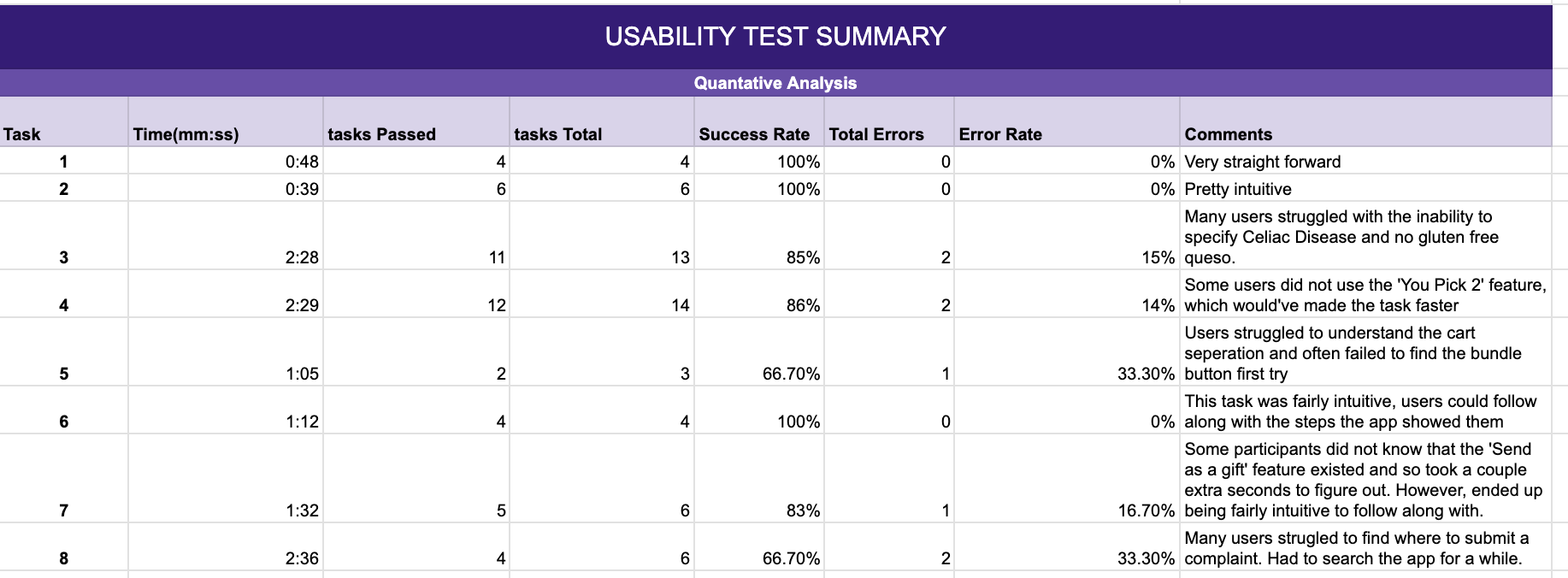
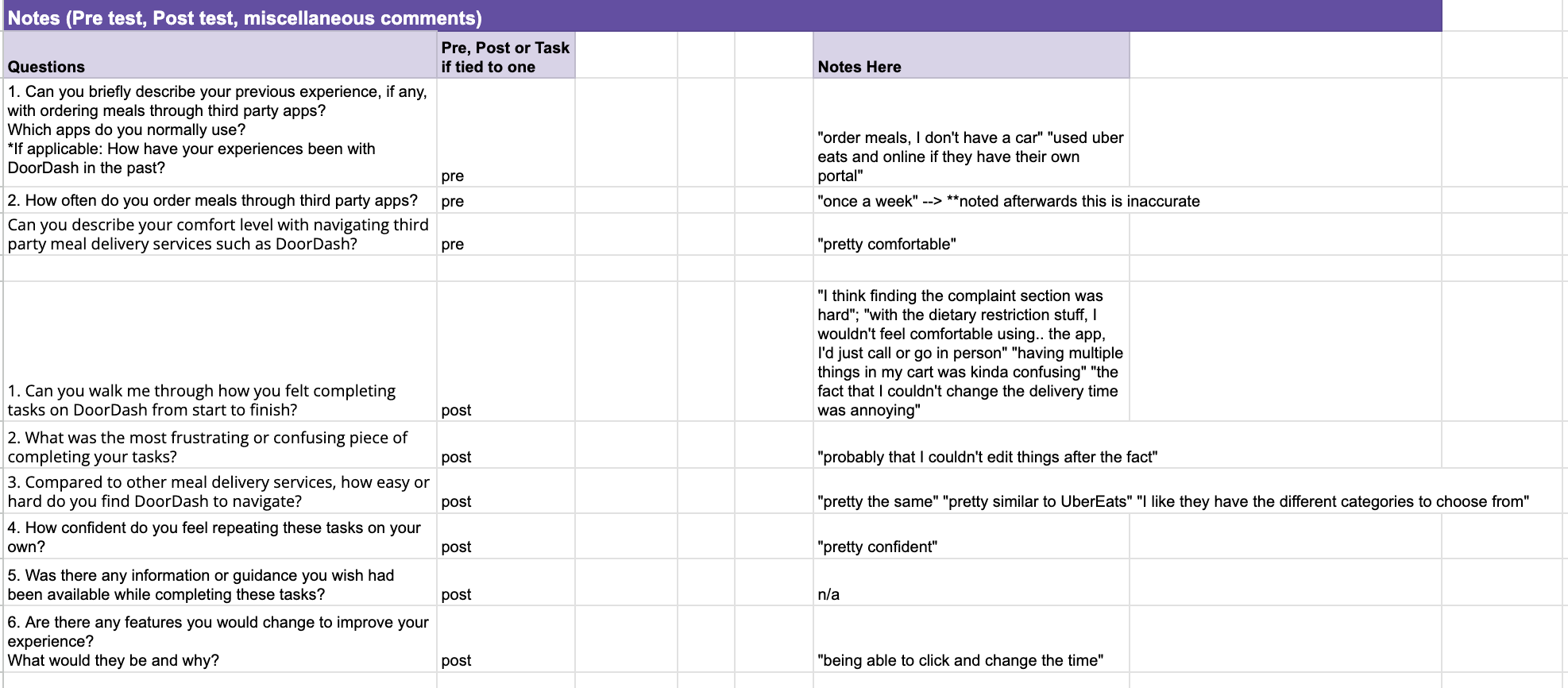
We documented users' navigation paths, task completion times, notable quotes, errors, negative reactions, and usability issues. Participants were also asked post-test questions about their biggest challenges and potential improvements.
-
After testing, our team brought together notable quotes, observations, and behavioral patterns across all 12 participants. Through synthesis, several recurring areas of friction emerged around dietary accommodations, complaint reporting, order customization, and gifting.
TESTING FOCUS
-
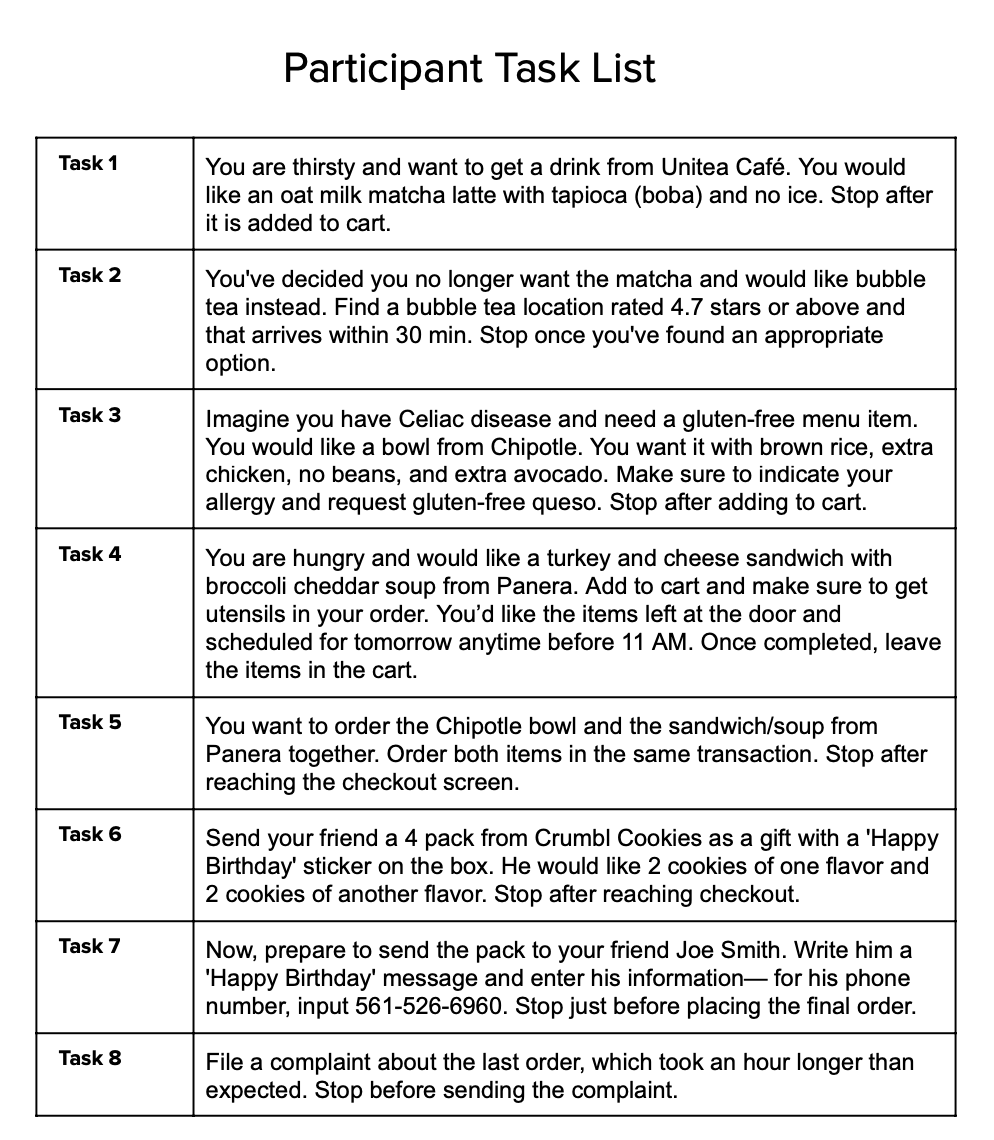
Participants navigated restaurant menus and built orders with specific requirements, allowing us to observe how easily users could locate menu items and understand customization options.
-
Participants were asked to communicate a gluten-related dietary restriction while creating an order, testing whether DoorDash made allergy and dietary information discoverable and actionable.
-
Participants attempted to report an issue with a previous delivery that arrived an hour late, allowing us to evaluate the discoverability and clarity of DoorDash's support flow.
-
Participants attempted to send Crumbl cookies to a friend, testing how clearly the interface distinguished recipient information, address details, messaging, and checkout actions.
Key Findings
-
What We Found
Participants struggled to communicate dietary restrictions when a restaurant did not accept special requests. None of the participants discovered that switching restaurant locations could provide another option, creating uncertainty for users with allergies or dietary needs.Evidence
7/12 participants encountered a usability issue during the task, while half displayed a negative reaction.Recommendation
Add an Allergy Specifications section where users can select dietary restrictions, add comments, and clearly see when a restaurant cannot accommodate their needs. -
What We Found
Users struggled to locate the flow for reporting a problem with a previous delivery. Several navigated through unrelated screens or resorted to trial and error.Evidence
5/12 participants encountered a usability issue, while 6/12 demonstrated either a negative reaction or task-completion error.Recommendation
Surface a clear “Report an Issue” or “Need Help?” action directly on the Orders page, reducing the existing multi-step path through Receipt → Help → Problem with Delivery. -
What We Found
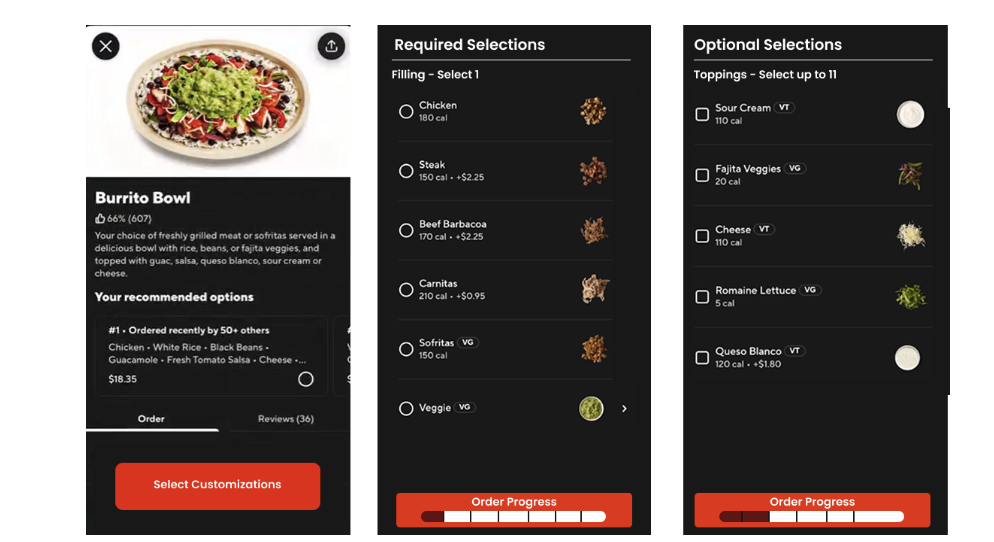
Participants struggled to locate menu items and understand how to apply customizations. Nested options, scrolling, and unclear organization made complex orders feel overwhelming.Evidence
Customization tasks took notably longer than other tasks, and 5 participants required facilitator assistance.Recommendation
Create a clearer, sequential customization flow that mirrors the natural in-person ordering process, with visible progress and high-demand modifications surfaced more prominently. -
What We Found
Users had difficulty distinguishing their own information from the recipient's information when sending a gift. Labels and hierarchy created uncertainty about addresses, messages, and whether an action had been completed.Evidence
The gifting process generated 7 negative-reaction codes across participants.Recommendation
Reorganize gifting into a clear sequence: recipient → address → message → sender → digital card, and replace ambiguous language such as “Save” with “Continue to Checkout.”
Final Solution + Impact
Together, our recommendations address four key moments of friction uncovered through usability testing. Rather than redesigning DoorDash as a whole, we focused on targeted improvements that could make unfamiliar or complex tasks easier to understand, navigate, and complete.
What I Learned
Dietary Accommodations
ACCESS
Simplified Support
RESOLVE
Intuitive Ordering
CUSTOMIZE
Clearer Gifting Flow
GIFT
This project gave me hands-on experience conducting moderated usability tests from start to finish. I learned how to guide participants without influencing their behavior, capture both what users said and what they actually did, and organize a large amount of qualitative data into meaningful patterns. Working with my team to synthesize 12 sessions also showed me how research becomes most valuable when individual observations can be translated into clear, evidence-based design recommendations.
Skills Developed: Usability Testing · Moderation · Think-Aloud Protocol · Qualitative Coding · Research Synthesis · Wireframing · Team Collaboration